
Horse Breed: Warlander
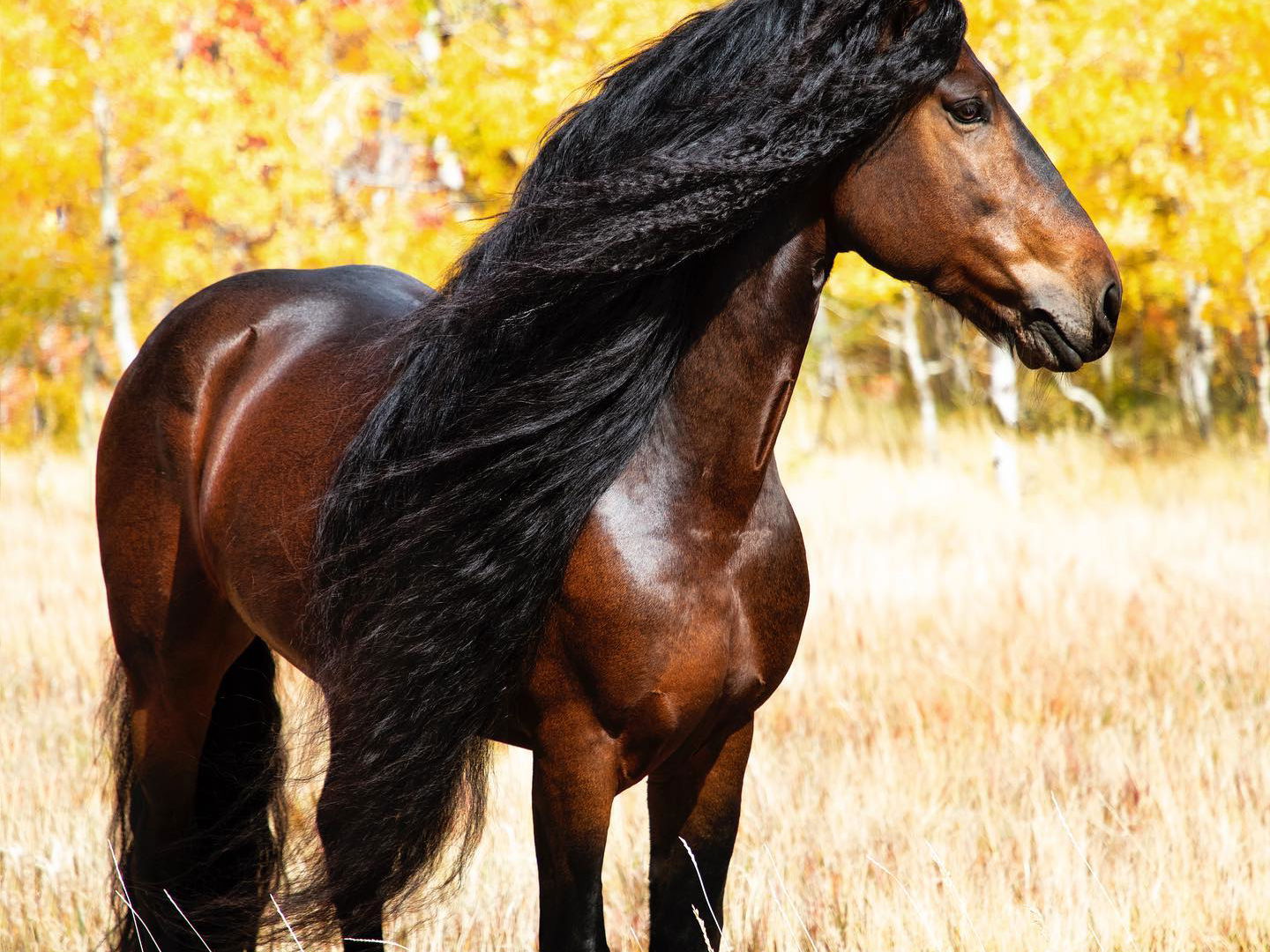
Name of breed: Warlander
Country of origin: Many!
Breed origin: The Warlander was developed by crossing Friesians with purebred Iberian horses – typically Andalusians, but Lusitano and Menorquín bloodlines are also allowed. Although the Warlander wasn’t recognised as a breed until the late 20th century, the crossing of Friesian and Iberian horses has a history going back to at least the 16th century, and probably much earlier. These two Baroque breeds are distinctly different, the Friesian being a relatively heavy-set horse with dramatic action and a perfect build for carriage driving, while Iberian horses are lighter and more supple, with a reputation as supremely comfortable, brave and willing mounts. When crossbred, the offspring inherit the best traits of both breeds and in turn, consistently pass these traits on to the next generation.
The term ‘Warlander’ was coined in 1990 by Karen-Maree’ Kaye of the Classical Sporthorse Stud in Australia, who named the breed after the stud’s veterinarian, Dr Warwick Vale. After establishing a breeding programme, Kaye was approached by breeders from around the world who had crossed Friesian and Iberian horses and achieved fantastic results. Soon enough, a studbook was established, and the Warlander became officially recognised as a breed in 2010. Despite the Warlander’s small population being spread out across the world, it has generally maintained a very consistent standard thanks to the strict regulations of both the Warlander studbook and the studbooks of the foundation breeds.
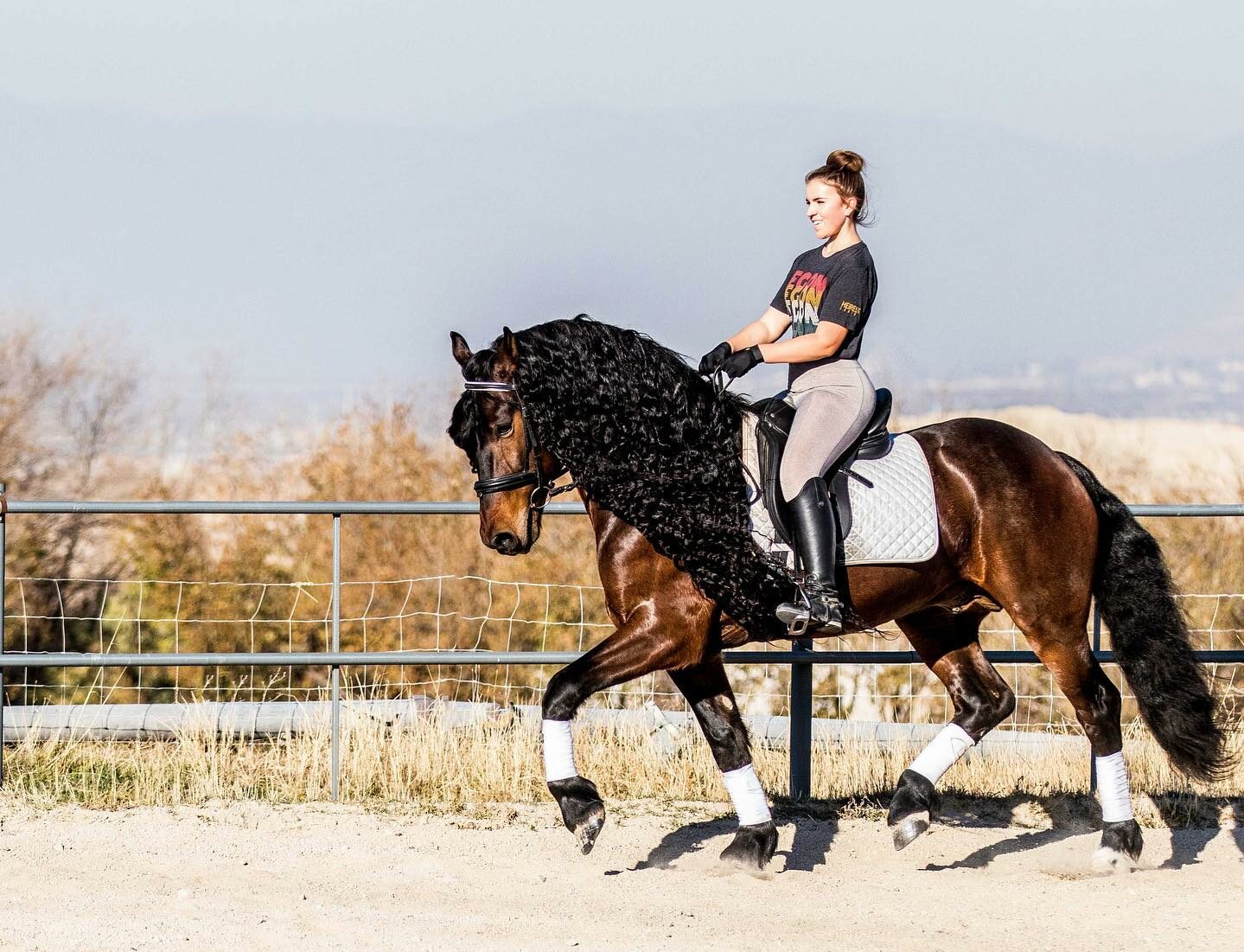
Distinguishing features: The Warlander displays the strongest and most desirable qualities of Iberian and Friesian horses, combining functionality with beauty. The ideal Warlander has a straight or slightly convex head with large, intelligent eyes and curved ears, carried upright and set on a well-muscled, arched neck. The topline curves down to well-rounded withers and long, sloping shoulders. The back is straight and strong, flowing into a rounded croup and powerful hindquarters. Warlanders have clean, flexible legs with solid, broad joints and well defined musculature. They display dramatic yet practical action at all paces, with natural collection, impulsion and elegance. They are intelligent, docile and willing, adapting to new situations and disciplines with ease. Like its ancestors, the Warlander has a thick, long, and sometimes wavy mane and tail.
Modern day Warlander: Bred as a modern sport horse, Warlanders have a particular flair for dressage and also excel at driving, classical riding, modern equitation, western riding and reining, and many other disciplines besides. Their calm, willing temperament and versatility has endeared them to a huge variety of riders, from children to adults, novices to professionals.
References: Warlander Studbook Society, Wikipedia, International Warlander Society & Registry.
Image credits: photos of the majestic Titan the Warlander used with the kind permission of Kaitlyn Gunther, Imperial Kings Stables.
Discover more
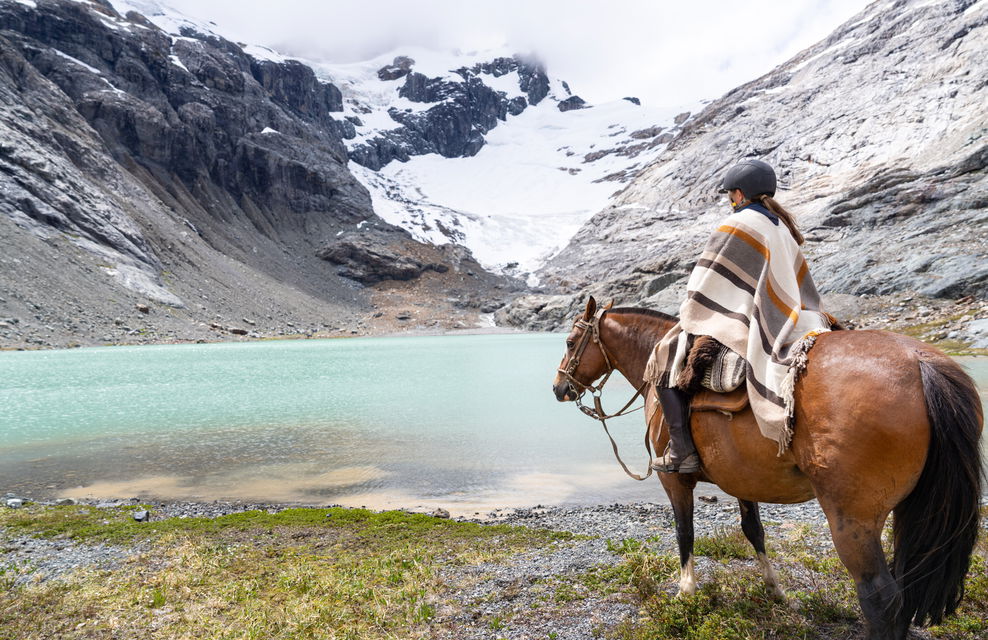
Why We Love Riding in Ponchos | Horse Riding Holidays
Have you ever ridden in a poncho? When I visit a new country I try to immerse myself in the horse culture choosing to ride in the traditional tack (even if a English saddle is available) and dress in the clothing that is inherent to that region. It makes sense that the horsemen have perfected their…
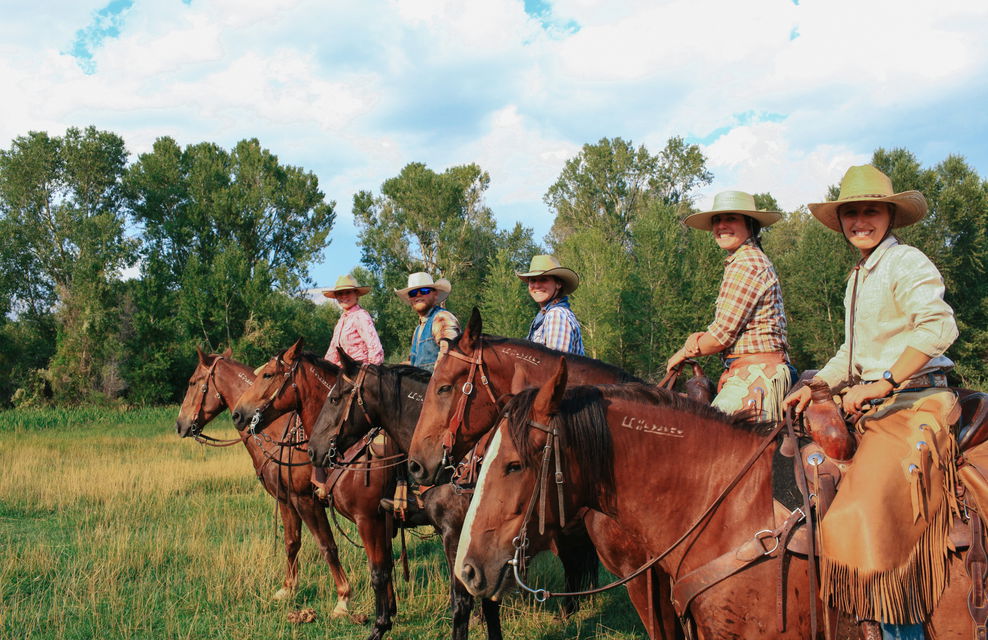
Horse Breed: Mustang
Few horses capture the spirit of the American West quite like the American Mustang. Descended from Spanish horses and shaped by life on the open range, the Mustang is known for its intelligence, stamina, and sure-footed nature. While often associated with wild herds roaming the western plains, these remarkable horses also make exceptional partners on…
Horse Breed: Australian Stock Horse
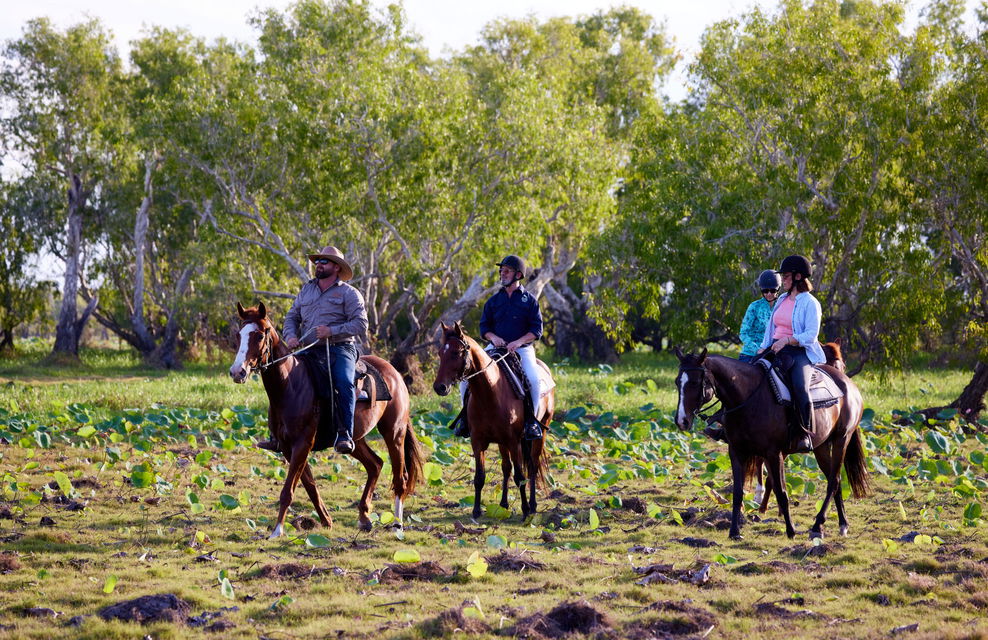
Name of breed: Australian Stock Horse Country of origin: Australia Breed origin: The roots of the Australian Stock Horse date back to the arrival of the First Fleet in 1788, which brought nine horses of Thoroughbred and Spanish blood to the continent. These were shortly followed by more importations of Thoroughbreds, Arabians, Welsh Mountain Ponies…
